
The Old Dunlewey Church: A Haunting Gem in the Wilds of Donegal
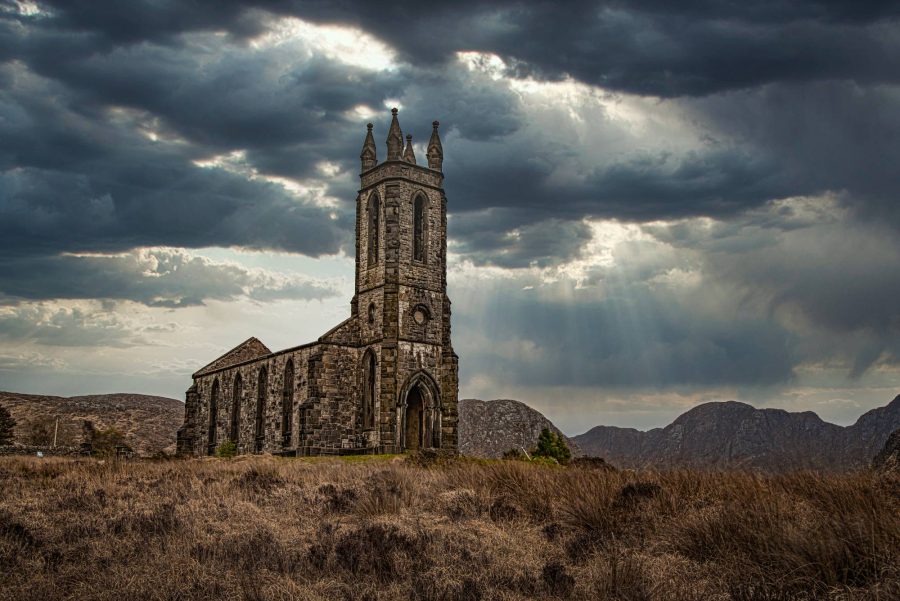
The Old Church in Dunlewey, Ireland, is a mysterious and captivating relic of a bygone era. This tiny church, perched on the edge of the dramatic and windswept Dunlewey Lake, has withstood the test of time and the elements for over 150 years. The church was originally built as a memorial to James Russell, a […]
Beltany Stone Circle: A Neolithic mystery outside Raphoe
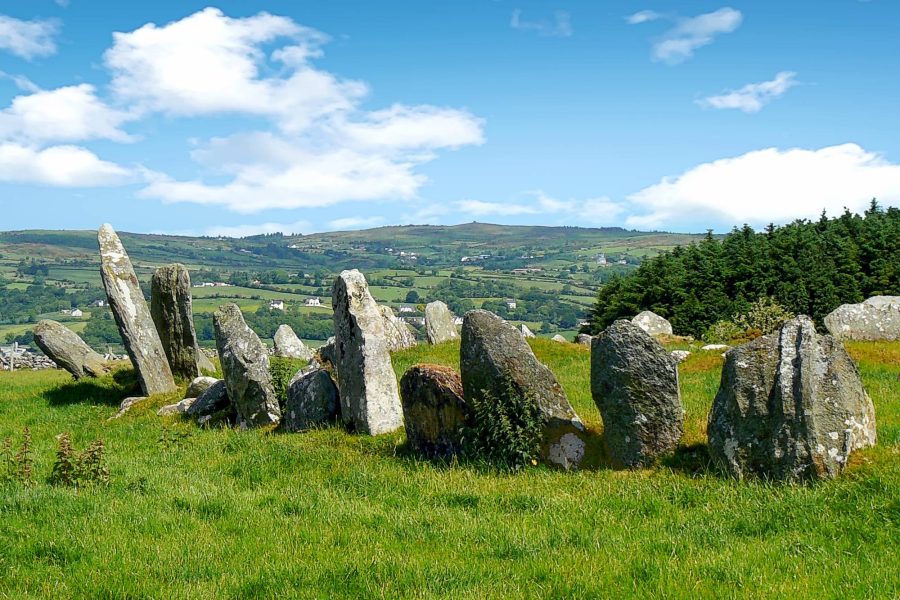
Hidden away in the rolling hills of County Donegal, Ireland, lies the Beltany Stone Circle, a remarkable and little-known archaeological site just outside the village of Raphoe. Comprising of 64 stones arranged in a circular pattern, the Beltany Stone Circle is one of the largest stone circles in Ireland and remains shrouded in mystery and […]
History of Corcomroe Abbey, Co. Clare
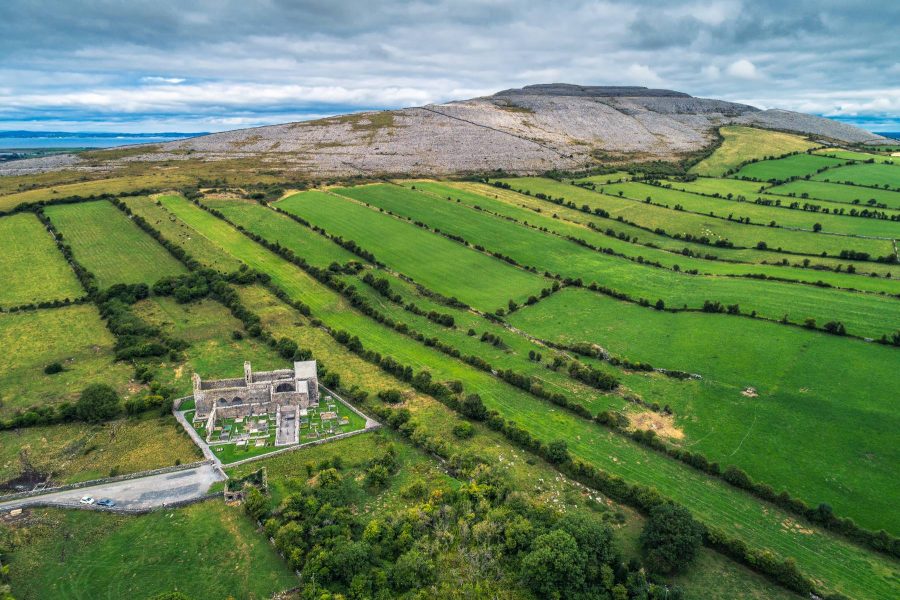
Nestled in the rolling hills of County Clare, near Ballyvaughan, lies the abandoned ruins of Corcomroe Abbey. Founded in in 1190, this once-grand abbey is now a forgotten piece of history, known only to the few who take the time to seek it out. Corcomroe Name The abbey takes its name from Corco Mrua (meaning […]
The SS Laurentic: A Fascinating Shipwreck off the coast of Ireland

In the depths of the Atlantic Ocean lies the remnants of the SS Laurentic, a British passenger liner that was repurposed as a military transport ship during World War I. This ship is a testament to both the ingenuity of naval engineering and the tragedy of war, and remains one of the most fascinating shipwrecks […]
Tory Island: An Enchanted Isle Steeped in Myth and History

Tucked away off the coast of County Donegal in Ireland lies the rugged and windswept isle of Tory Island. This remote speck of land, just three miles long and one mile wide, has been the home of a tight-knit community for centuries and is steeped in myth, legend, and history. The earliest known inhabitants of […]
The Mysterious Tau Cross on Tory Island
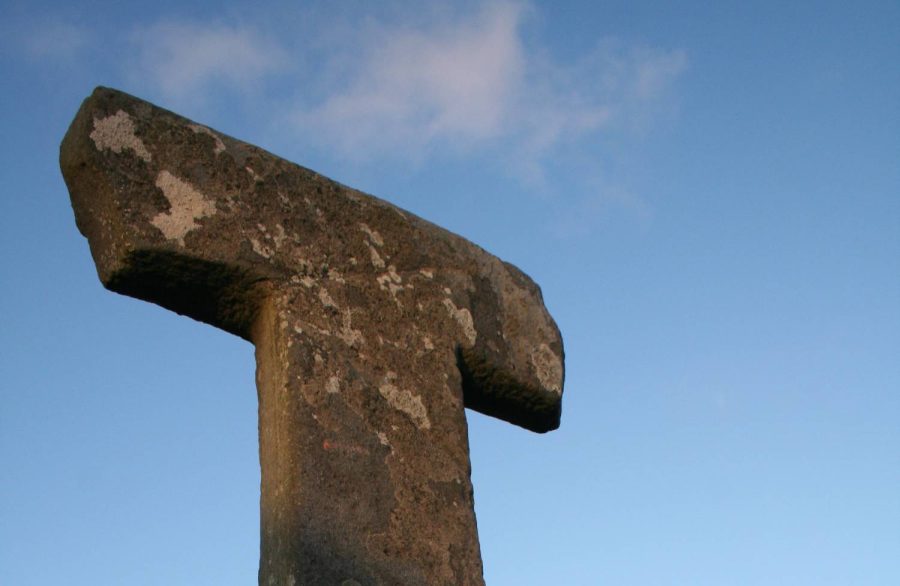
Tory Island, located off the northwest coast of County Donegal, Ireland, is home to a unique and mysterious symbol carved into the rugged landscape: the Tau Cross. The origins of the cross are uncertain, but it is believed to date back to the early Christian period, possibly as early as the 7th century. The cross […]
Old photos of Rathmullan, Co. Donegal (in colour)
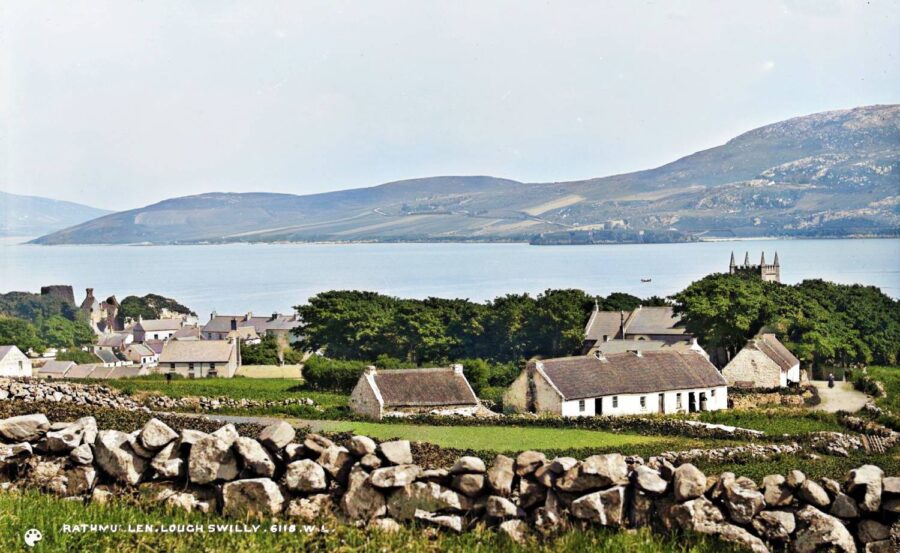
Thank to DeOldify/MyHeritage.com for providing the colour to these old photos.
The history of Clifden, Co. Galway
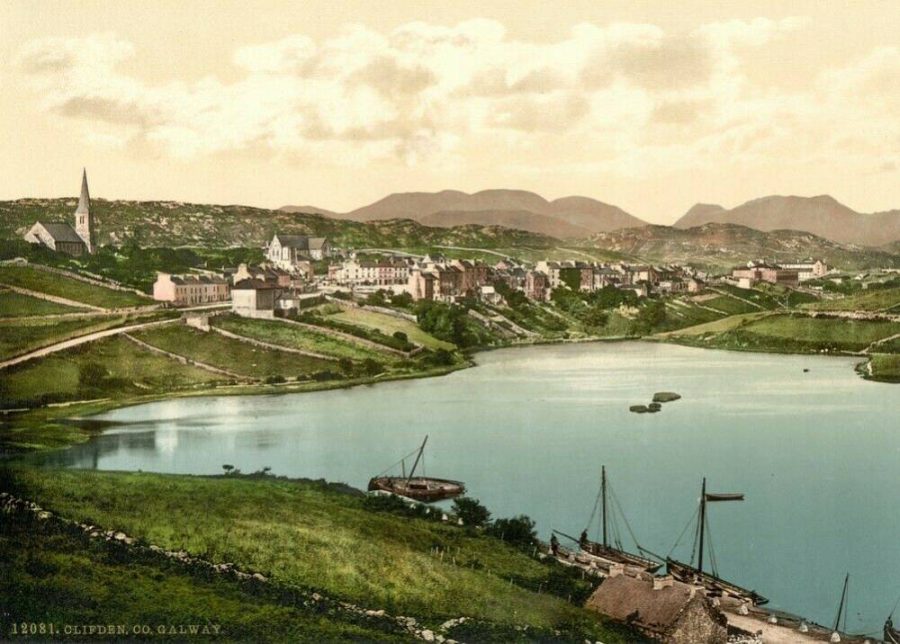
The name Clifden means ‘An Clochán’ in Irish, or ‘Stepping Stones’. The town was founded at the start of the 19th century by John D’arcy (1785-1839) who lived in Clifden Castle (now in ruins). He inherited the estate when it was mostly used for fishing and farming. In 1820, a failed potato crop caused suffering […]
A brief history of Kilkee, Co. Clare
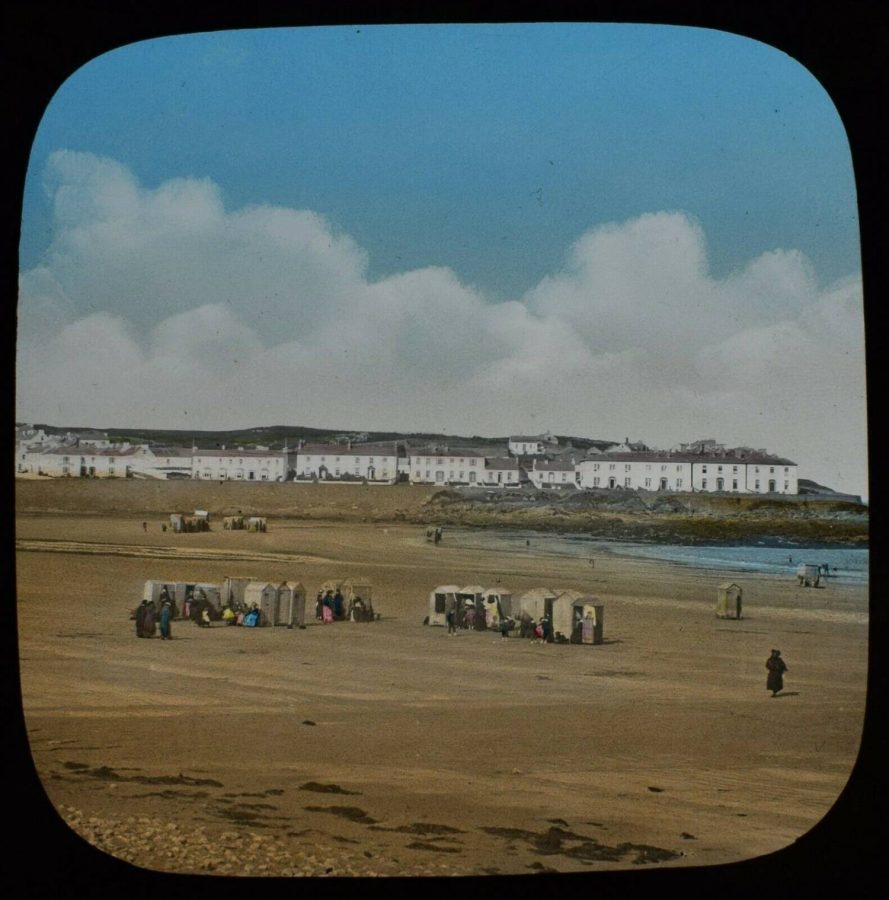
Kilkee, Co. Clare began as a small fishing village which gained popularity amongst the wealthy in Limerick who were unable to travel around Europe due to the Napoleonic Wars. Many of them visited Kilkee for its natural amenities and bathing areas. In the 1820s a paddle steamer service commenced from Limerick to Kilrush, which provided […]
The history of Blackcave Tunnel, Larne, Co. Antrim
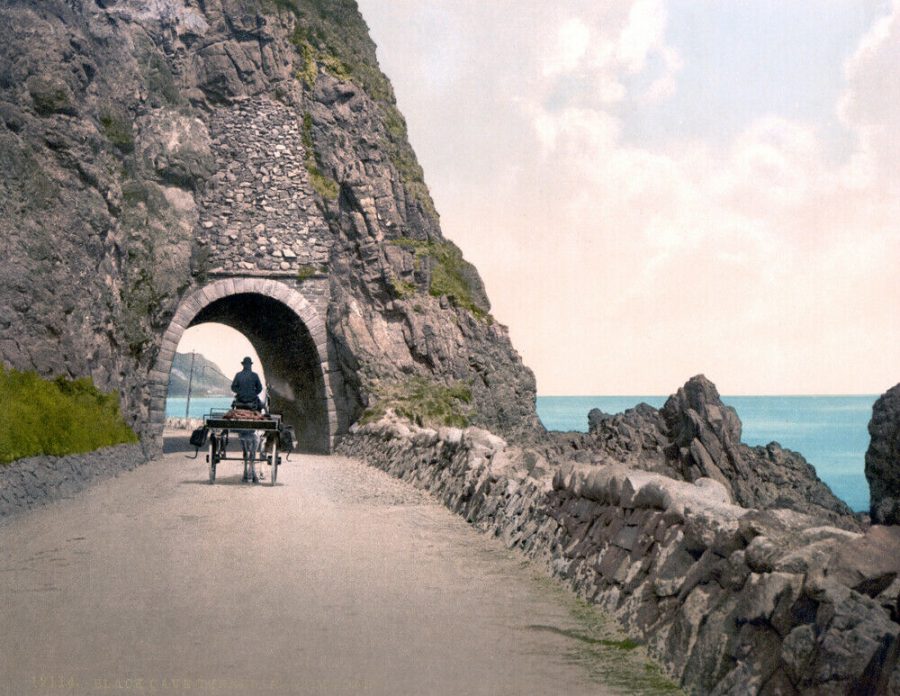
Learn more about the construction of the Antrim Coast Road by William Bald, and the famous Black Arch near Larne.
History of Capel Street, Dublin
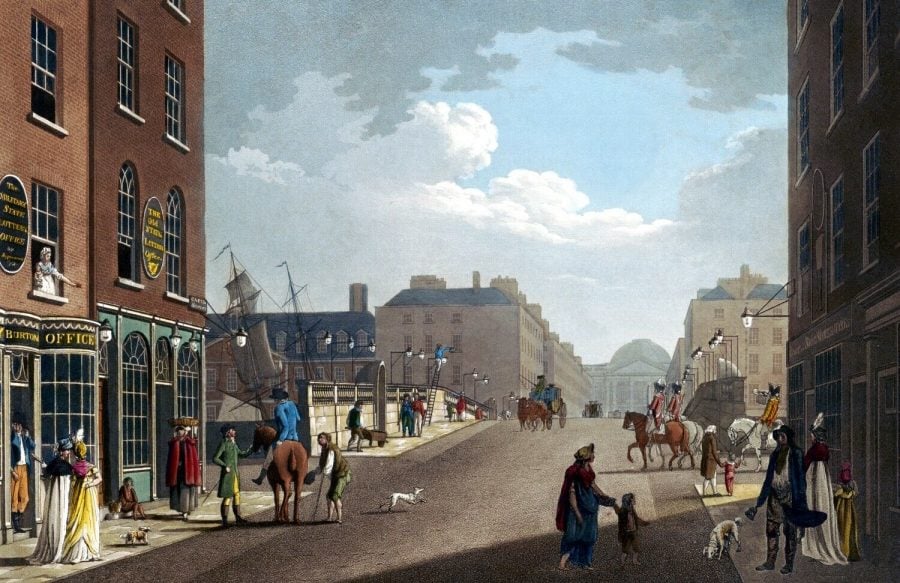
Learn more about the history of Capel Street and its builder Sir Humphrey Jervis.
Glendenning Monument, The Octagon, Westport

The Glendenning monument was erected in 1845 to commemorate the memory of George Glendenning (1770-1843), a local land agent and wealthy banker. It’s said the statue was erected not for the esteemed manner of his memory, but because he left a large sum of money in his will to have it erected. The monument was […]
Lookout Post 79, Fanad Head, Co. Donegal
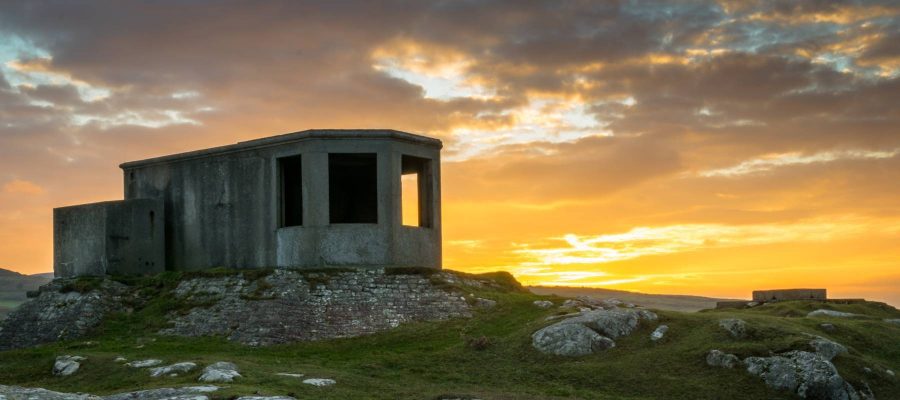
In the lead up to World War 2, the Irish Defense Forces set up a series of lookout posts called the ‘Coast Watching Service’. 83 of these posts were placed along the coast every 5-15 miles and local volunteers called Coastwatchers kept an eye out. Coast Watchers used work in 8-12 hour shifts, in pairs. […]
History of the Ramelton Bottling Stores, Co. Donegal
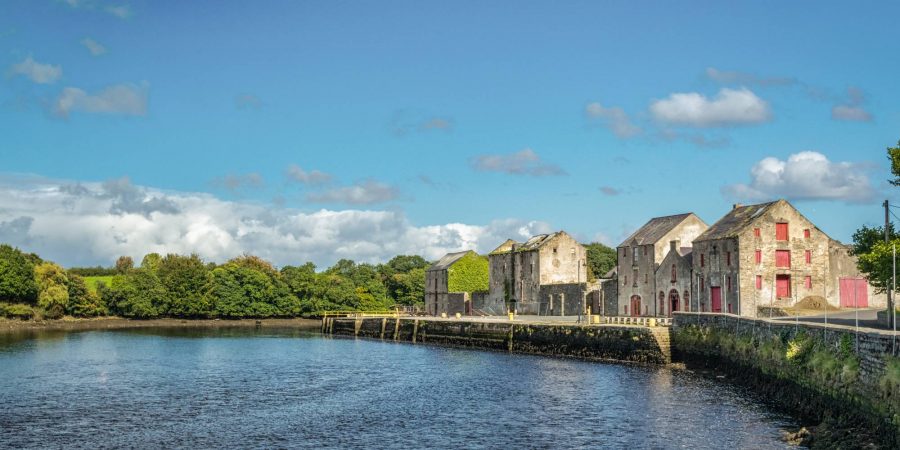
The Ramelton Bottling Stores were built around 1830 and extended over the years to the north along the quay. In the 18th and 19th century, Ramelton was a prosperous port with trade extending to Great Britain, North America, Norway and the Caribbean. There are accounts of ships from the Caribbean sailing up Lough Swilly, anchoring […]
Tullymore Lighthouse, St. John’s Point, Donegal
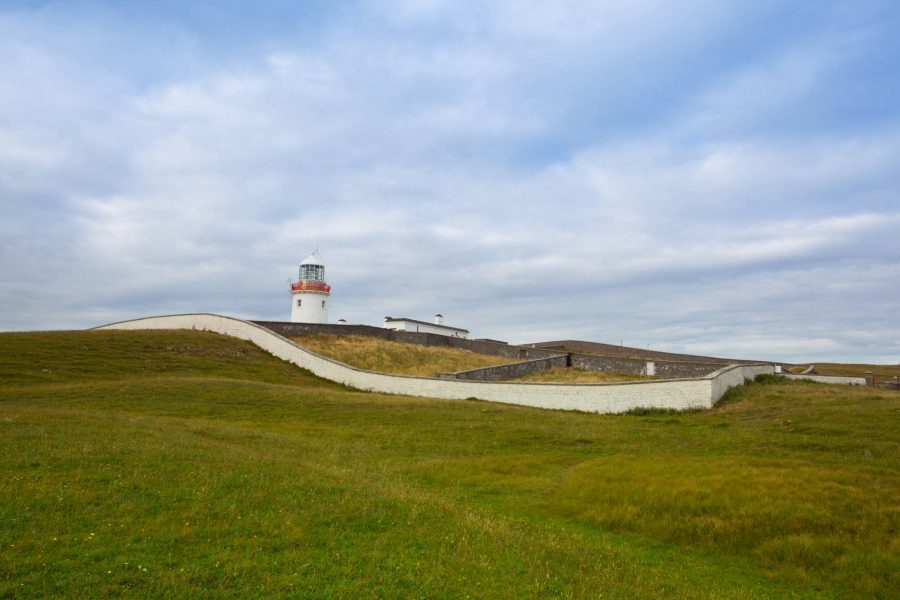
Tullymore Lighthouse dates back to 1825 when the traders and merchants in Killybegs asked the Ballast Board for a navigation light on St. John’s Point to help ships navigate their way to safe harbour. After some delays, the approval was given in 1829 to start construction. George Halpin Sr. was tasked with the design and […]
Liam Emery’s Celtic Cross, Killea, Co. Donegal

The Mystery of the Cross on the Hill In 2016 passengers on an aircraft approaching City of Derry Airport noticed an unusal sight on the Donegal hillside as they approach to land. A 100m tall cross on the hill was visible in the fields near Killea, and nobody knew how they appeared. Was it a […]
A look at Ballina in the 1840s
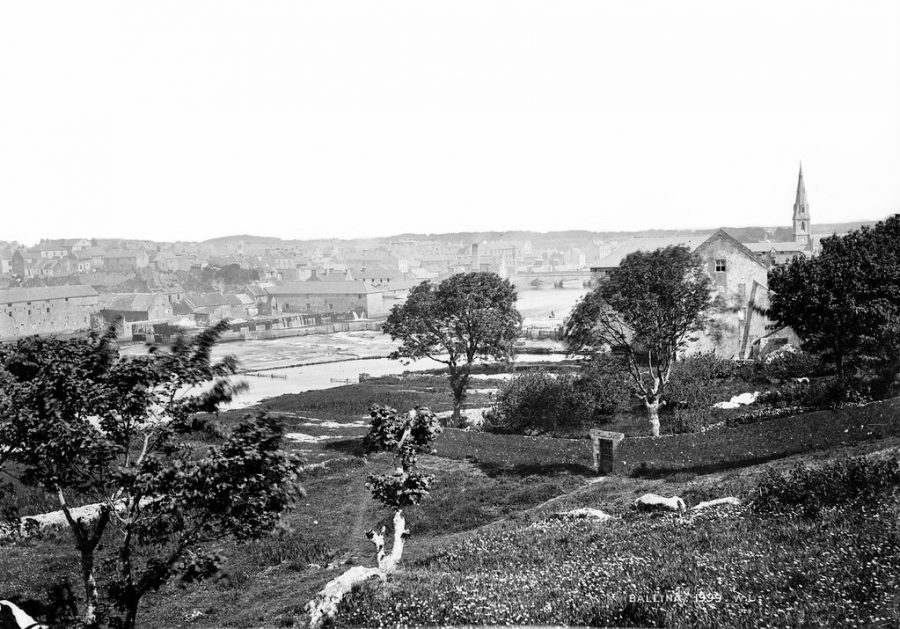
Ballina is a charming sea-port town, located in the Kilmoremoy parish, Tyrawley barony, Mayo county, and the province of Connaught. It’s situated just about 17 miles to the north-east of Castlebar and roughly 125 miles west-north-west from Dublin. Its current population is about 5,313 people. Originally named Belleek, or “Ford of the Flags,” the town […]
A look at Abbeymahon in the 1840s

ABBEYMAHON, a parish, in the union of Bandon, barony of Ibane and Barryroe, county of Cork, andprovince of Munster, 1 1/2 mile (E. S. E.) from Timoleague; containing 3261 inhabitants. This parish issituated on the north-west side of Courtmacsherry bay, on the south coast. It formerly constituted part of the parish of Lislee, from which […]
A look at Abbey, Co. Clare in the 1840s
ABBEY, a parish, in the poor-law union of Ennistymon, barony of Burren, county of Clare, and province of Munster; containing, with the post-village of New Quay, 1442 inhabitants. This place, which is situated on the road from Galway to Ennistymon. and on the shores of the harbour of New Quay or Murticlough, at one time […]
Dublin City (in 1849)
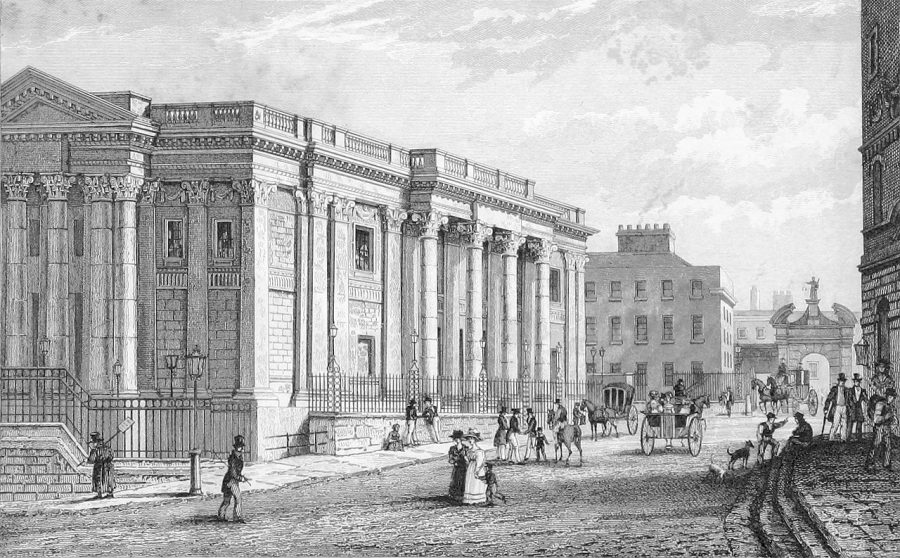
DUBLIN, the metropolis of Ireland, a city, and a county of itself, in the province of Leinster; situated in 53° 21’ (N. Lat.) and 6° 17′ (W. Lon.), 339 British miles (N. W.) from London; and containing, in the year 1841, 232,726′ inhabitants, exclusively of a large number in suburbs within the county of Dublin: […]
A look at Cork City in the 1840s

Cork, a bustling coastal city, serves as both a county in itself and as the vibrant capital of County Cork, residing within the charming province of Munster. It’s perched 51 miles southwest of Waterford and 126 miles in the same direction from Dublin, and is home to over 80,000 residents. Ranking as Ireland’s second largest […]
Donegal Town hiring fair

The day I got there the Diamond was full of people and of carts and cars tilted on their end; I counted over fifty of these vehicles. It was the big hiring fair. Boys and girls engage themselves to employers from the ayth of May to the 2oth of November, and there is another hiring […]
How Tyrone and Tirconaill (Donegal) got their names.
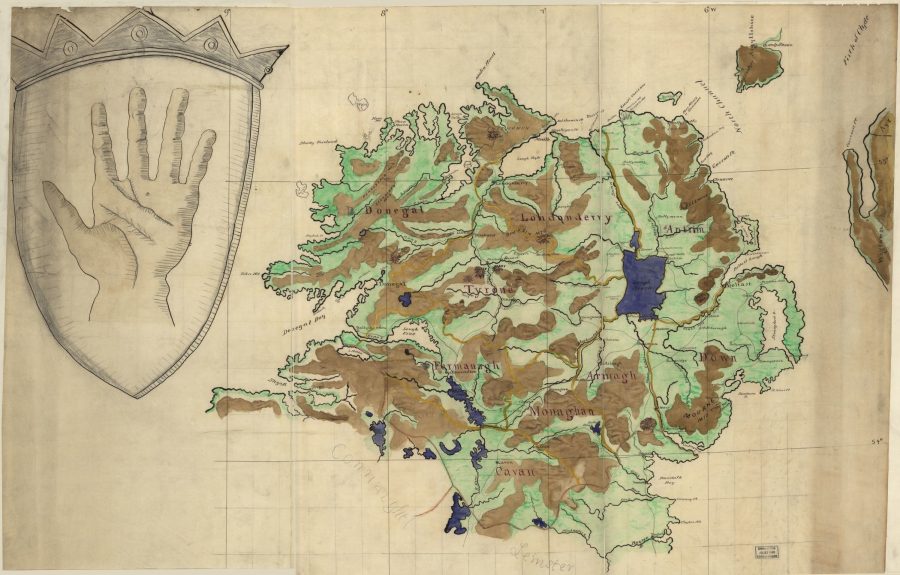
Tir Eoghan the province of Owen was once a great principality, which stretched its frontier from the west of Lough Erne across Lough Neagh to the shores of the Channel by Belfast. In the days when Irelandhad a fate of her own Tyrone was the country of the O’Neill. Centuries after Strongbow centuries after the […]
Ardara, Co. Donegal in 1893
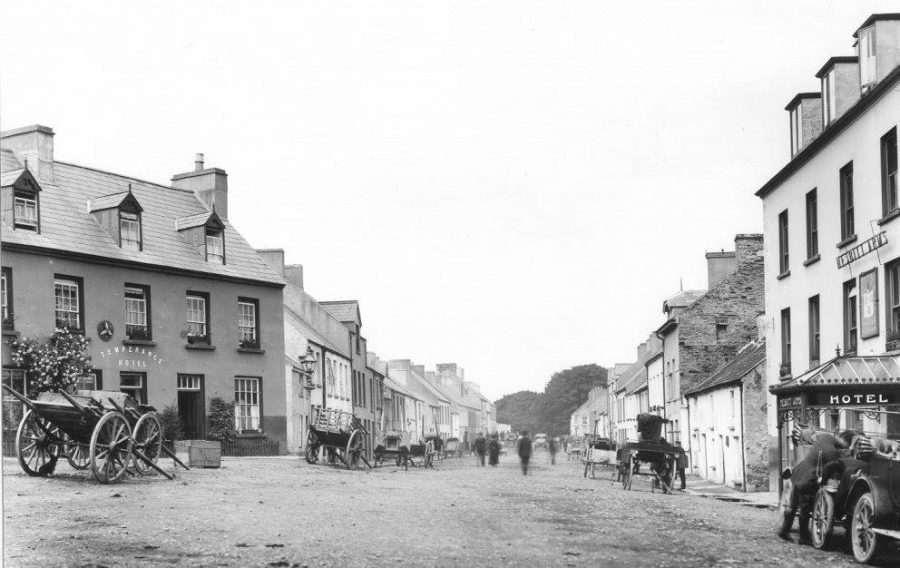
The town or village or Ardara, or Hill of the Fort, takes its name from a very conspicuous earthen fort which stands on a hill about 200 perches to the north-east of the town. The “Nesbitt Arms Hotel” offers every inducement to tourists or anglers, and the scenery is magnificent. Two splendid salmon rivers empty […]
Burtonport in 1893
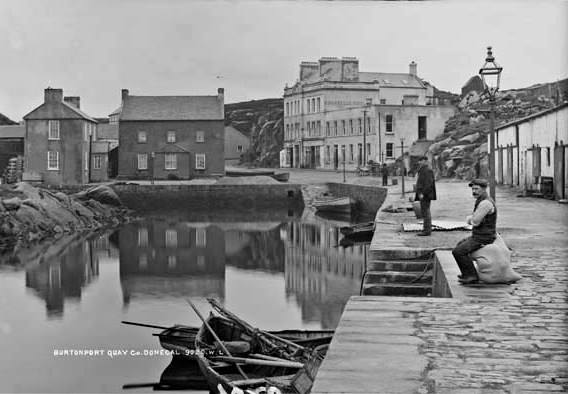
The tourist should visit this interesting spot, at which a boat may he chartered for Arran and the other islands. The position of “the Port,” as it is locally called, is extremely advantageous for commercial purposes, especially as, through the energy and enterprise of Messrs. Hammond & Herdman, regular steam communication has been established between […]
William Sydney Clements (Lord Leitrim) (1806 – 1878)
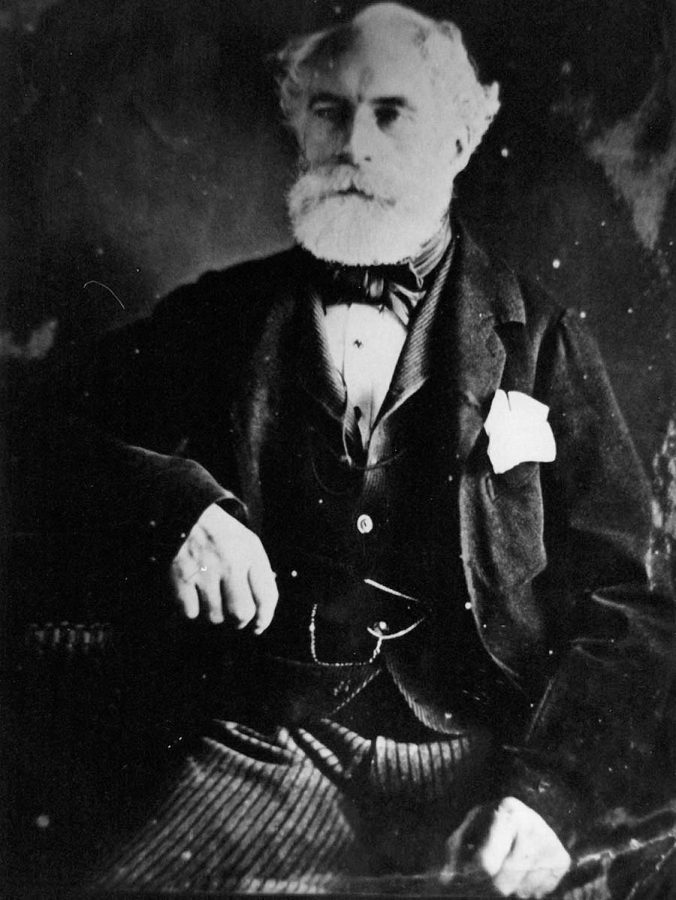
William Sydney Clements, the 3rd Earl of Leitrim was an Anglo-Irish nobleman and notorious landlord. Born in 1806, he was educated in Sandhurst and served in Portugal for the British Army between 1826 and 1827. In 1831 he was promoted to captain. Following his father’s death he was promoted to Lutentant-Colonel and retired from the […]
The murder of Lord Leitrim

The third Earl of Leitrim had served in the army, rising to be a colonel, before he succeeded his father in the title. He was a man by no means wholly bad and possessed qualities which might, under happier circumstances, have made him famous absolute courage and a perfectly indomitablc will. Nothing could be less […]
Video of Cork in 1902
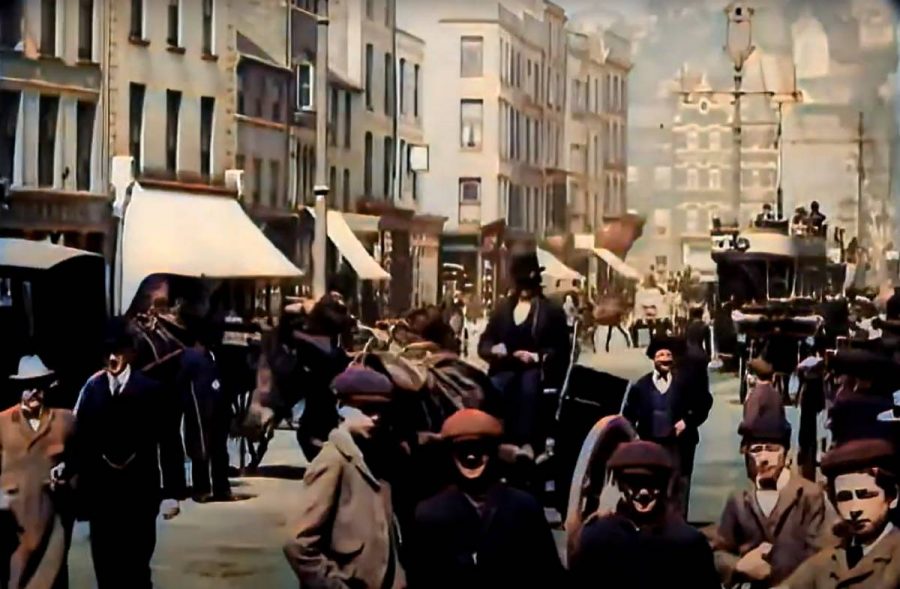
Another interesting video from the folks at the Items of Interest YouTube channel.
Video of Dublin in 1915
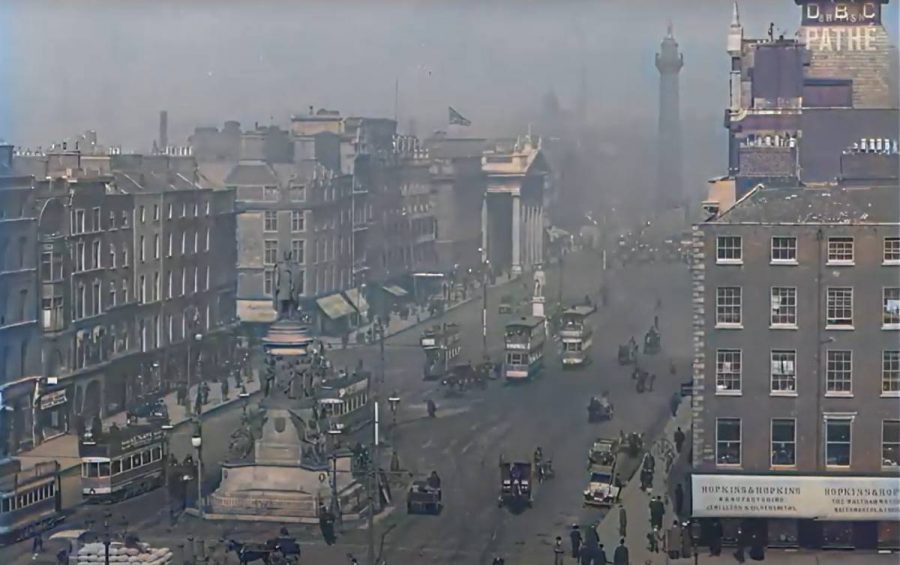
It’s fairly unusual to see a video that dates back over 100 years, but here it is. Thanks to the folks at the Items of Interest YouTube page for putting this online.
Rathmullan, Co. Donegal
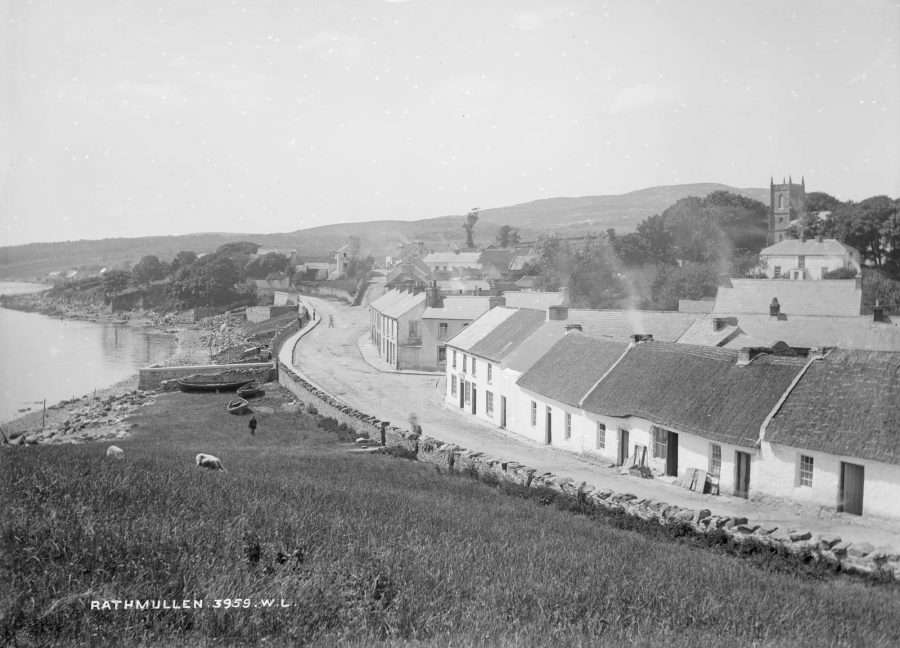
Rathmullan is a small, picturesque seaside village on the western shores of Lough Swilly in Co. Donegal. In 1607 the Flight of the Earls took place just outside the village in a place called Carolina Bay. This marked the end of the Gaelic chieftain rule in Ireland, a major point in Irish history. Some other […]