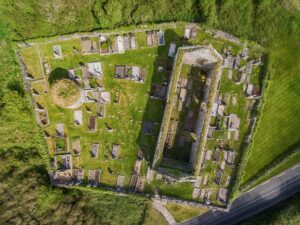
Somewhere within it sits a classified architectural fragment, recorded and assigned a monument number, but not yet accompanied by any publicly available description of what it actually is. The fragment could be a carved door jamb, a section of decorative moulding, a piece of a Romanesque arch, or something altogether harder to categorise. Its presence in the record without further detail makes it, in a small way, more intriguing than a fully documented carving might be.
Killinaboy itself has form when it comes to unusual stonework. The ruined church there is well known for bearing a sheela-na-gig above its doorway, one of those carved figures of ambiguous meaning found on a number of Irish and British medieval buildings, sometimes interpreted as apotropaic symbols intended to ward off evil. The parish also contains the remains of a two-storey tower house and a number of other early Christian and medieval features scattered across the limestone landscape. An architectural fragment recorded separately from these better-known monuments suggests something that either came loose from a structure over time, was reused in later building work, or was noted in situ but not yet fully contextualised in the public record.