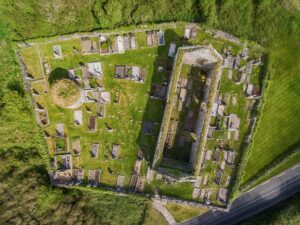
Such sites are more common across the Irish landscape than many people realise, yet each one tends to carry its own local texture of belief and practice. Typically, a holy tree or bush marks a place of veneration, often associated with a nearby holy well, a patron saint, or a pattern day, the local term for an annual gathering of prayer and ritual at a sacred site. Offerings left by visitors, strips of cloth tied to branches, coins pressed into bark, speak to a continuity of folk devotion that sits somewhere between pre-Christian custom and Catholic practice.
The classification of such a site as a monument places it alongside raths, souterrains, and standing stones in the formal inventory of Irish heritage, which is itself a reminder of how seriously these quiet, living features of the landscape are now taken by archaeologists and heritage professionals. Without more detailed local documentation available at present, the specific tradition attached to this particular tree or bush in Kells remains unclear, including which saint or event it might be connected to, and whether any associated pattern day is still observed. Clare as a county has a particularly dense concentration of holy wells and sacred natural features, and the Kells site fits within that broader pattern of a landscape still threaded through with older layers of meaning.