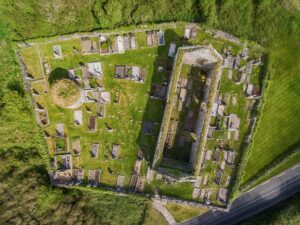
It is not. The mound is a cairn, a type of monument built from heaped stone, here measuring roughly six metres north to south and just over four metres east to west at its base, narrowing to a small flat platform at the summit no more than 1.8 metres across. At that modest height of between thirty and sixty centimetres, it barely interrupts the pasture around it, yet the geometry of it, that levelled top, the careful proportions, speaks to deliberate construction rather than gradual accumulation.
What makes the site stranger still is the presence of a standing stone positioned at the cairn's north-eastern edge. The pairing of a cairn with a standing stone is not unheard of in the Irish prehistoric landscape, where upright stones and burial or ritual mounds frequently appear in proximity, sometimes marking an entrance or threshold, sometimes simply sharing a sacred site across long spans of time. Whether the two features here were raised together or belong to separate moments of activity is not recorded. The cairn itself sits on a low, flat-topped hillock in pasture, which may itself have influenced the choice of location, elevated just enough to be visible, anchored in the local topography without dominating it.