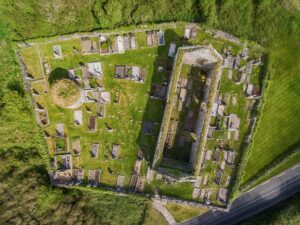
The footprint measures roughly ten metres north to south and eight metres east to west, with a small open area, about three metres long and two metres wide, at its centre. That gap, preserved within the scatter of collapsed masonry, is the detail that caught attention: it suggests an interior space, the hollow where walls once enclosed something domestic and habitable.
A cashel is a type of early Irish stone-walled enclosure, often circular but occasionally square, used to protect a farmstead or small settlement. The cashel at Clooneen is square in plan, and this possible house occupies its south-western corner, the position within the enclosure that would have offered some shelter from prevailing weather. Beyond that, the record is spare. No date has been established, no historical documents are known to name the occupants, and the stones themselves have not been excavated. The structure is recorded simply as a house of indeterminate date, which in Irish archaeological terms can span a considerable range, from the early medieval period through to the post-medieval centuries.
What remains is subtle rather than dramatic: a low, uneven spread of stones that a casual walker might not read as architecture at all. The open centre is the thing to look for, that rectangular absence within the rubble which implies a roofed interior once stood here, however long ago.