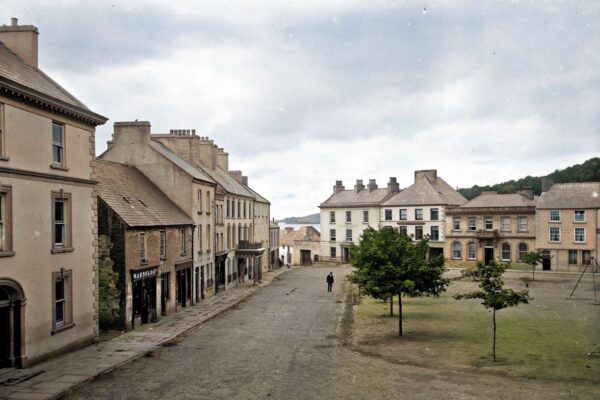
Historic town, Knocknaganny, Co. Sligo
Co. Sligo |
Urban Centers
Knocknaganny, in County Sligo, carries the designation of historic town, a category that implies centuries of settlement, trade, or administrative significance, yet it sits quietly outside the usual circuits of Irish urban history.
The name itself, derived from the Irish Cnoc na Gainimhe, meaning hill of the sand, hints at a landscape that shaped where people chose to live and gather, though the full story of what made this place a recognised town in any formal or archaeological sense remains frustratingly elusive in the published record.
The classification of historic town is applied in Irish archaeology to settlements that show evidence of planned or organic urban development in the medieval or early modern period, places that might have held a market, supported a defined street pattern, or functioned as a local centre of exchange and habitation. Sligo as a county has no shortage of such places, many of them associated with Anglo-Norman plantation activity or with the territories of Gaelic lordships like the O'Connors and the MacDonaghs, who shaped the region's political geography across the medieval centuries. Where exactly Knocknaganny fits within that broader pattern, whether it grew around a defended site, a river crossing, or a religious foundation, is a question the available material cannot yet answer with confidence.
What can be said is that the site's formal recognition points to something substantive having taken place here, enough to distinguish it from the surrounding rural landscape and earn it a place in the inventory of Ireland's historic settlements. For a location in Sligo, that is not a negligible thing.
Visitor Notes
Added by