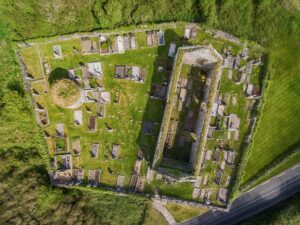
This is a ring-barrow, a type of prehistoric burial monument in which a central mound is enclosed by a surrounding ditch, known as a fosse, and an outer bank. The one at Booltiaghadine measures roughly twenty metres across at its widest, with the central mound rising less than a metre and a half above the surrounding ground. The fosse, now overgrown with rushes, is flat-bottomed and just over a metre wide at its base. A slight outer bank completes the circuit, broken only by a gap of about two and a half metres on the north-western side, possibly an original entrance.
Ring-barrows are generally associated with the Bronze Age or early Iron Age and are thought to have served as funerary monuments, though their exact ritual function varied. What makes the Booltiaghadine example quietly arresting is its proximity to another burial site altogether. Roughly sixty-six metres to the south-south-east lies a children's burial ground, a type of site known in Ireland as a cillín, where unbaptised infants and others excluded from consecrated ground were interred, often over many centuries. The pairing of a prehistoric monument and a post-medieval cillín in such close proximity is not unique in Ireland, but it is striking. Whether the proximity was coincidental or whether the older monument lent the location some sense of otherness or sanctity is impossible to say, but the clustering of the dead across different eras in this one patch of undulating pasture has its own quiet weight.