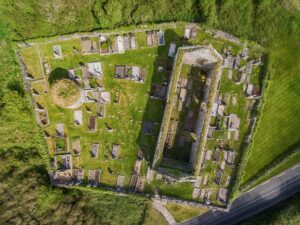
It is the kind of feature that could easily be passed over as a natural rise in the ground, yet it was recorded as a cairn, a deliberate accumulation of stones typically raised over a burial or as a territorial or ceremonial marker, by researchers Jones, Carey and Hennigar in a 2011 map of the area.
What makes the location quietly compelling is its context. The cairn does not sit in isolation. Approximately seventy-five metres to the north-north-east lies an unclassified megalithic tomb, a prehistoric stone-built burial monument whose exact type has yet to be determined. The proximity of the two features, set within a landscape that still carries the traces of an ancient field system, suggests this part of Caherfadda was once a purposefully organised and inhabited place, with monuments arranged across the ridgeline in ways that may have been deliberate rather than incidental. Whether the cairn and the tomb are broadly contemporary or represent different phases of activity in the same landscape remains an open question.