
Camus Castle, Camus, Co. Tipperary South
Co. Tipperary |
Masonry Castles
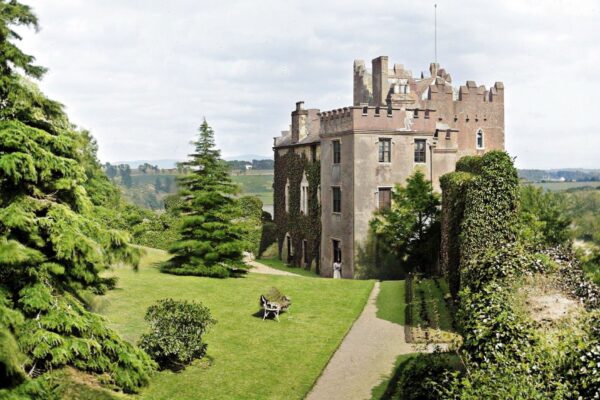
Nestled in the level pastures of Camus in County Tipperary South stands the fading memory of what was once a formidable stone castle.
Built sometime before 1640, this substantial manor house belonged to Archbishop Malcolm Hamilton of Cashel, who died within its walls in April 1629. The Civil Survey of 1654 to 1656 paints a picture of its former glory, describing a large stone house surrounded by a defensive bawn; a type of fortified courtyard typical of Irish plantation castles.
By 1840, when the Ordnance Survey Letters were compiled, the site had already fallen into considerable decay. The surveyors noted what they called 'small remains of two square castles', though these were actually the surviving mural towers that once punctuated the bawn walls. These towers would have served as defensive positions, allowing the castle's inhabitants to protect the enclosed courtyard from potential attackers during the turbulent centuries of Irish history.
Today, visitors to Camus will find little evidence of the castle itself at ground level; centuries of stone robbing and natural decay have erased most traces of Archbishop Hamilton's grand residence. However, remnants of the bawn walls can still be spotted by the keen observer, along with one of the original mural towers, standing as lonely sentinels in the peaceful Tipperary countryside. These fragments serve as tangible links to a time when powerful churchmen built fortified homes, blending religious authority with the practical need for defence in an often unsettled land.
Ref: TS01120
04-Essential
Nearby Places
Visitor Notes
Added by

Pete F
Simington, R.C. (ed.) 1934 The Civil survey, AD 1654-1656. Vol. II: county of Tipperary – Western and Northern baronies. Dublin. Irish Manuscripts Commission.
White, J.D. 1892 Anthologia Tipperariensis. Cashel.
O’Flanagan, Rev. M. (Compiler) 1930 Letters containing information relative to the antiquities of the county of Tipperary collected during the progress of the Ordnance Survey in 1840. Bray.