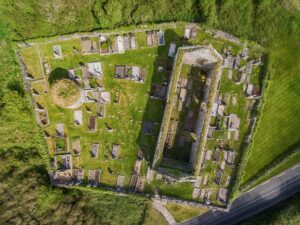
It belongs to a category of site found across Ireland known as a cillín, a place set apart from consecrated ground where unbaptised infants, and sometimes others considered outside the formal rites of the Church, were laid to rest. These sites occupy a quiet margin in the Irish landscape and in the historical record alike, often unmarked, often known only to the families who used them across generations.
Cillíní were not places of neglect so much as places of necessity. Catholic doctrine, as it was practised in Ireland from the medieval period well into the twentieth century, held that a child who died before baptism could not be buried in hallowed ground. The response was pragmatic and deeply local: families buried their infants in liminal spaces, old ringforts, townland boundaries, the margins of fields, or pre-Christian enclosures. The name Cahercorcaun contains the Irish word cathair, referring to a stone-walled enclosure or cashel, the sort of prehistoric or early medieval structure common across the Burren region of Clare. Such enclosures were already ancient and already outside the jurisdiction of the Church, which made them quietly suitable. The association between these old fortified sites and children's burial grounds is well documented across the west of Ireland, reflecting a folk understanding that places already set apart from ordinary life held their own kind of sanctity.