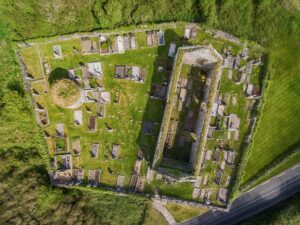
This is a crannog, a type of man-made or partially man-made lakeshore dwelling constructed from timber, stone, peat, and brush, built up in shallow water and used across Ireland from the Bronze Age well into the early medieval period. They were defensive by nature, places where a family or small community could withdraw from the land and sleep with water between themselves and any threat. Lough Inchiquin, a narrow lake in the Burren landscape of north Clare, holds one such structure, quietly recorded and just as quietly overlooked.
The source material for this particular crannog is thin, which is itself a kind of fact worth noting. Many of Ireland's lake islands were never extensively excavated or documented in detail, and this one sits in that category of known but underexamined monuments. What can be said is that its location in Lough Inchiquin places it within a landscape long occupied by human activity. The Burren region surrounding the lake is dense with prehistoric and early historic remains, from portal tombs and ring forts to the ruins of later tower houses, and a crannog here would fit a pattern repeated hundreds of times across Irish lakes. These structures were typically occupied by people of some local standing, farmers and cattle-keepers who invested considerable labour in their island platforms precisely because the effort signalled permanence and security.