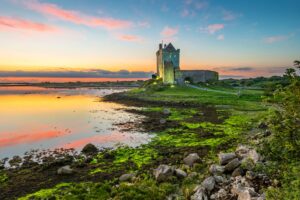
A folly, in the landscape tradition, is a structure built not for shelter or utility but for effect, to catch the eye across a lawn, to suggest a romantic ruin, or simply to announce that the owner had both the means and the imagination to build something unnecessary. That one exists at Doorus is not surprising in itself; designed landscapes across Ireland frequently incorporated such flourishes. What gives it a particular quiet interest is its setting.
Doorus Demesne is perhaps best known as the estate of Count Florimond de Basterot, the French-Irish aristocrat whose house became a meeting place for figures at the centre of the Irish Literary Revival in the 1890s. It was here, in the summer of 1897, that W. B. Yeats and Lady Augusta Gregory first discussed with Edward Martyn the idea that would eventually become the Abbey Theatre. The demesne itself occupies a narrow peninsula extending into Kinvara Bay, edged by the limestone landscape of south Galway, and its designed grounds would have reflected the picturesque ideals fashionable among landed estates of the eighteenth and nineteenth centuries. A folly within such a landscape would have served as a focal point, drawing a visitor through the grounds toward some composed vista or carefully arranged prospect.