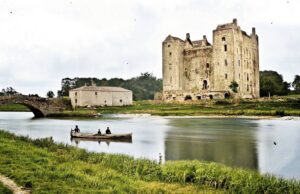
It is listed simply as an enclosure, the broadest of archaeological categories, applied to anything from a prehistoric ringfort to a medieval farmstead boundary. The term covers a wide range of human intentions: defence, agriculture, ritual, habitation. Without further detail, the shape of the thing is there, but the story behind it remains in the dark.
Ballinphunta sits within a county that has an unusually dense concentration of ancient enclosures, a consequence of Clare's geology and land use history, which together preserved earthworks that elsewhere were ploughed flat. Ringforts, known in Irish as raths or lisses depending on their construction, were typically built between the early medieval period and around the twelfth century, serving as enclosed farmsteads for a single family or small community. Whether this particular enclosure fits that pattern, or belongs to an earlier or later tradition entirely, is not currently known from available sources. The townland name itself, Ballinphunta, derives from the Irish, though its precise meaning and the history of settlement here remain unrecorded in what is publicly accessible.