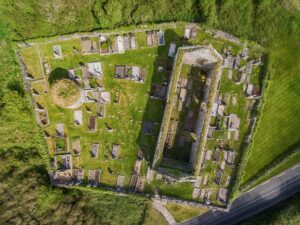
The term enclosure, in the Irish archaeological sense, covers a broad family of features: roughly circular or oval boundaries defined by earthen banks, ditches, or stone walls, used variously for settlement, agriculture, ritual, or livestock management across several millennia. Without more specific detail, the Clooncoose example sits quietly in that category, its precise character and date unconfirmed in any publicly available record.
Clooncoose as a place-name derives from the Irish, likely containing the element cluain, meaning a meadow or secluded pasture, which is among the most common components in Clare townland names and tends to point toward low-lying, agriculturally usable ground. That kind of landscape, especially in the west of Ireland, is well populated with enclosures of early medieval date, many of them the remains of raths or ringforts, the farmsteads of farmers who worked the land between roughly the fifth and twelfth centuries. Whether the Clooncoose enclosure belongs to that tradition, or to something older or more specialised, remains an open question.