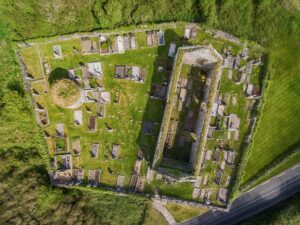
This is not a single monument but a cluster of farms, cairns, and megalithic tombs embedded within an organised field system that stretches roughly two and a half kilometres north to south and one and a half kilometres east to west. The walls that divide this landscape are prehistoric mound walls, built up from cleared stone and earth, and they still run across the hillside in recoverable sections. What stands at Parknabinnia is one fragment of that wider world, a partially surviving enclosure that was once part of a farm known in the archaeological record as Farm 7.
Survey and excavation led by Jones and colleagues, published in 2011, established that at least four prehistoric farms sit within roughly 200 metres of each other on Roughan Hill alone. Farm 7 consists of two enclosures; this one and a second that lies approximately 60 metres to the north-east. Only the western half of the enclosure at Parknabinnia survives, running around 28 metres on a north-east to south-west axis. Its identification as prehistoric rests on several converging lines of evidence: lithic artefacts, meaning worked stone tools and flakes of the kind found on the other farms on the hill, the construction style of the walls themselves, and the fact that the enclosure is physically integrated into the same mound wall system that ties the whole landscape together. The implication is that all of these farms were in use during the same broad period, part of a single, organised prehistoric community making use of the Burren's distinctive limestone terrain.
The Burren is unusual in Ireland for the degree to which its thin soils and exposed karst surface have allowed early field boundaries and settlement traces to survive without being buried or substantially reworked. Roughan Hill concentrates that survival in a particularly dense way, making it one of the more remarkable prehistoric farming landscapes on the island, even if it requires some patience and a good eye to read the low, mossy walls for what they are.