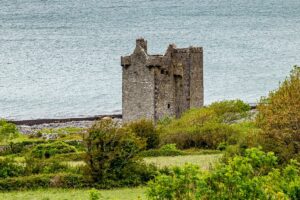
The only way in was always a ladder, and the stone foot-plate that once anchored it is still visible, embedded in the earth a little over three metres from the base of the tower. Above the doorway, a small circular opening in the lintel may have served as a murder-hole, a device through which defenders could drop or pour things on anyone attempting to force entry from below. Three gun placements survive at parapet level, and the interior is covered by a brick-vaulted roof, a reminder that these structures were designed to absorb considerable punishment.
Martello towers were a chain of coastal fortifications built across Ireland and Britain in the early nineteenth century in response to the very real fear of Napoleonic invasion. This example at Finnavarra Point was constructed between 1812 and 1816, towards the end of that period of anxiety. It is an ovoid rather than strictly circular tower, around seventeen metres in diameter and ten metres tall, built from finely dressed rectangular limestone blocks set on a double plinth and tapering slightly as they rise. The masonry is notably precise, which sets it apart from more utilitarian military construction of the era. A separate stone building, now roofless and partly robbed out for its materials, stands just to the north-east of the tower. At roughly nine and a half metres long, it contained fireplaces and flues at both the north and south gable ends, suggesting it served as quarters or a support structure for the garrison. Some red brick survives in its walls alongside the limestone, hinting at the mixed materials available to military builders working on the western Irish coast in the early 1800s.