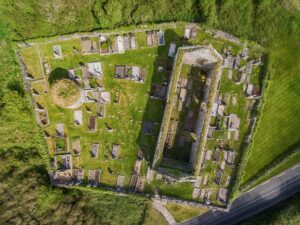
These low, horseshoe-shaped mounds, typically found near water, are the remains of ancient cooking sites, probably Bronze Age in date, where stones were heated in a fire and then dropped into a water-filled trough to bring it to the boil. The process left behind cracked, fire-shattered stone that accumulated over repeated use into the distinctive mound shape still visible today. The one at Ballyportry in County Clare is a quiet example of this widespread but curiously anonymous class of monument.
The townland of Ballyportry sits in a county exceptionally well-furnished with prehistoric remains, from the limestone pavements of the Burren to the megalithic tombs of the Fergus basin. Fulachtaí fia in Clare tend to cluster in low-lying, waterlogged ground, and the Ballyportry example almost certainly follows this pattern, positioned where the practical requirements of the cooking method, proximity to a reliable water source and fuel, could be met. The name fulacht fia translates roughly from Old Irish as "cooking pit of the deer" or "cooking place of the wild," though debate continues among archaeologists about whether these were primarily cooking sites, places for textile processing, or something else altogether. Most excavated examples date to the middle and late Bronze Age, roughly 1500 to 500 BC, though some are earlier or later.