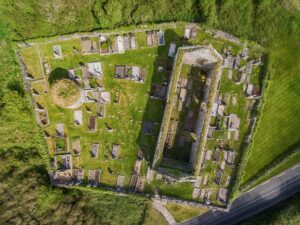
These horseshoe-shaped mounds, typically found near water, are the remnants of ancient cooking sites, where stones were heated in fire and then dropped into water-filled troughs to bring them to the boil. The charred, shattered fragments of those stones accumulated over repeated use, eventually forming the low, dark mounds that survive today. The one at Ballyportry in County Clare is a quiet example of a type so common that archaeologists sometimes joke Ireland may have more fulachta fia than any other kind of monument, yet so little understood that debate about their precise function continues to this day.
The fulacht fia tradition spans a broad swathe of Irish prehistory, with most examples dating to the Bronze Age, roughly 1500 to 500 BC, though some may be earlier or later. The name itself, loosely translated from Old Irish, is sometimes rendered as "cooking place of the Fianna", a reference to the mythological warrior band, though this tells us more about later folklore than actual Bronze Age practice. Some archaeologists have proposed that the sites served not only as cooking places but also as venues for brewing, hide processing, or bathing. Ballyportry, a townland in the north of Clare, sits in a region that preserves a considerable density of prehistoric activity, and the presence of a fulacht fia here fits a wider pattern of Bronze Age settlement and movement across the landscape.