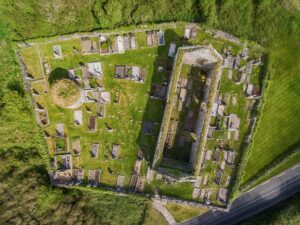
These low, horseshoe-shaped mounds, typically found beside streams or in boggy ground, are the remains of ancient cooking sites, probably dating from the Bronze Age, roughly 2000 to 500 BC. The standard interpretation is that stones were heated in a fire, then dropped into a water-filled trough to bring it to the boil, a process repeated until whatever was being cooked, most likely meat, was done. The burnt and shattered stones were discarded to the sides, building up over time into the distinctive crescent mound that survives today. The example recorded at Leana in County Clare is one of many such sites in the region, Clare being particularly rich in Bronze Age monument types.
What makes fulachtaí fia collectively so compelling is the sheer ordinariness of what they represent alongside the questions they still raise. Experiments have shown the method works efficiently, yet the sites are almost always found near water and away from obvious settlement areas, which has prompted alternative theories: that they were used for bathing, textile processing, or brewing. None of these has been definitively ruled out. At Leana, the site sits in the quiet townland landscape of mid-Clare, where bogland and pasture have preserved many such earthworks largely undisturbed. The name fulacht fia translates loosely as "cooking pit of the deer" or "cooking place of the wild animal", though the Irish term is now used as a neutral archaeological label rather than a literal description of what was cooked there.