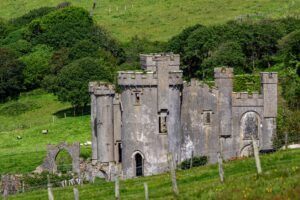
Derived from the Old Irish "cill", meaning a church or monastic cell, it signals that wherever the name appears, some form of early ecclesiastical activity almost certainly preceded it. The graveyard at Kill in County Galway belongs to this category of place, a site whose very location implies a long history of burial and worship stretching back well before any surviving documentary record.
Graveyards attached to "cill" placenames frequently occupy ground that was first consecrated during the early medieval period, roughly between the fifth and twelfth centuries, when itinerant monks and local clerics established small communities across the Irish landscape. These sites often lack the dramatic stonework of later medieval abbeys, yet their continuity of use can be remarkable. A graveyard that has served a community for over a millennium accumulates layer upon layer of meaning, the most recent headstones sitting above ground that has absorbed the memory of generations who left no inscription at all. The Kill graveyard in Galway fits this pattern of modest but persistent presence.
The documentary record for this particular site remains sparse, which is itself a common condition for early ecclesiastical enclosures in the west of Ireland. What the placename and the ground together suggest is a community that recognised this as a place set apart, long before formal parish boundaries were drawn or stone churches erected to replace timber predecessors.