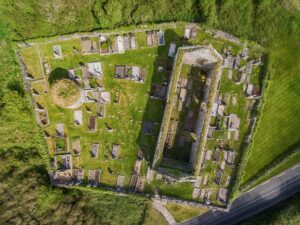
The interior diameter measures just one and a half metres, which gives some pause. This was not a dwelling in any conventional sense, or if it was, it was arranged around a life of considerable compression.
The structure belongs to a cashel, a type of early medieval stone enclosure, typically circular, that served as a fortified farmstead or sometimes a monastic precinct. Building a subsidiary structure against the inner face of the cashel wall was a practical choice, using the existing stonework as one side of the new building and saving both labour and material. The hut here follows that pattern, its own wall surviving to between 0.4 and 0.6 metres in height and spreading to around one and a half metres in width where it has tumbled, suggesting the original construction had some substance even if the roofline is long gone. Whether the space functioned as a sleeping cell, a storage area, or something else entirely is difficult to say without excavation, but the scale places it in a tradition of small ancillary structures commonly found within Irish early medieval enclosures, built for specific, often modest purposes within the larger economy of the cashel.