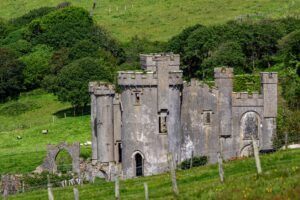
That minimal footprint is itself telling. Hut sites of this kind are among the most common yet least-celebrated monuments in the Irish landscape, the physical traces of shelters used by farming communities, seasonal workers, or travellers across many centuries, sometimes reduced to a slight depression in the ground or a low scatter of stones that most walkers would pass without a second glance.
The term hut site covers a broad range of structures, from early medieval booley huts used during transhumance, the seasonal movement of cattle to upland pastures, to post-medieval shelters associated with agricultural labour. Without more detailed information having been published for this particular site, it is not possible to say with confidence which period it belongs to, or what survives above ground. Kill itself is a placename derived from the Irish word cill, meaning a church or monastic cell, which hints at early ecclesiastical activity in the area, though that association need not have any direct bearing on the hut site itself.