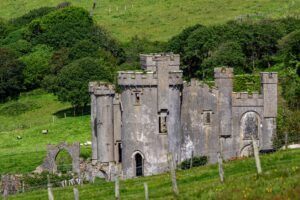
This particular site carries the unassuming designation of a monument, a catch-all term used by archaeologists when a feature has been identified and logged but not yet fully characterised. It may be structural, it may be earthwork, it may be something stranger still. The Connemara region has yielded everything from megalithic tombs and early Christian enclosures to post-medieval field systems and famine-era settlements, so the possibilities are genuinely wide.
Clifden itself was founded in the early nineteenth century by John D'Arcy, a local landlord who laid out the town around 1812, making it one of the youngest planned towns in the west of Ireland. Before that, the surrounding land was shaped by the rhythms of subsistence farming, seasonal grazing, and the occasional ambitions of Anglo-Norman and Gaelic lordships further inland. The broader Connemara uplands are dotted with the quiet remains of all of this, much of it still being catalogued and understood. That a monument near Clifden sits in a formal record without yet having its full details made publicly available is, in its own small way, a reflection of just how much the archaeology of the Irish west continues to be worked through.