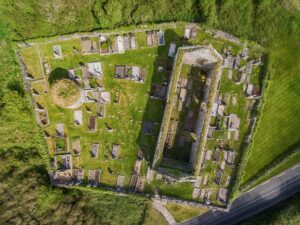
It has never been excavated, never formally exposed, and yet its presence has been mapped with reasonable confidence as a ring-ditch, a type of monument typically formed by a shallow circular trench dug around a central burial or funerary deposit in prehistory. The trench itself may long since have silted and levelled, leaving nothing above ground but a ghost in the soil.
The feature came to light in 2017 during a magnetic survey carried out by the Irish Fieldschool of Prehistoric Archaeology, then operating under the auspices of NUI Galway. Magnetic or geophysical survey works by detecting subtle differences in the magnetic properties of disturbed or burned soil, allowing archaeologists to identify buried features without lifting a spade. The results, published by Ó Maoldúin in 2020, placed this probable ring-ditch approximately 75 metres west of a known ring-barrow and two other circular features on the same hilltop. A ring-barrow is a low burial mound enclosed by a bank and ditch, and the cluster here suggests Knockloon Hill was used repeatedly, over perhaps centuries, as a place set apart for the dead. The small diameter of this particular feature is consistent with ring-ditches found elsewhere in Ireland, many of which mark individual or small-group interments dating to the Bronze Age or earlier.