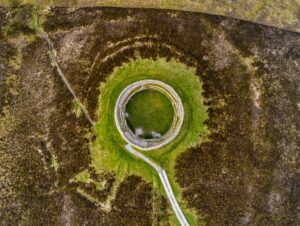
These underground passages, once common throughout the region, served as storage spaces and refuges for rural communities. This particular example features an L-shaped design with each leg extending at least 12 feet, roofed with flagstones in the traditional manner. Historical records from the 1940s suggest that over a dozen similar structures once dotted this area, particularly around the base of the mountain where the famous Grianán of Aileach fortress stands.
Archaeological assessment work carried out in 1997 revealed fascinating construction details of the Carrownamaddy souterrain. The structure features drystone walls built to a depth of about 0.4 metres below the modern field level, with a passage width varying between 1.1 and 1.3 metres. The roofing technique employed a double course of capstones set on slight corbelling, covered with smaller stones and gravelly soil. What makes this souterrain particularly interesting is its drop-creep entrance at the north-east end; a roughly square depression marked by two substantial sidestones, where the passage narrows before turning and widening again as it extends westward.
During the 1997 excavations, archaeologists made an unexpected discovery about 12 metres east of the souterrain. They uncovered evidence of late medieval metalworking activity, including a pottery sherd, burnt bone, and slag deposits. While this industrial activity post-dates the souterrain's original use, it demonstrates the site's continued importance through different historical periods. Though no visible habitation structures directly associated with the souterrain were found, the monument's presence in this corner of the field, where the ground rises slightly, hints at the strategic placement these structures often enjoyed in the early medieval Irish landscape.