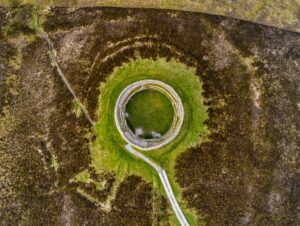
The rectangular stone tomb, measuring 22 inches by 13 inches and 12 inches deep, was carefully constructed with stone slabs lining its interior. When excavated by MacDonagh and Hartnett in 1951, this modest burial chamber yielded cremated human remains alongside two food vessels; ceramic containers that were commonly placed with the dead during Ireland's Bronze Age period.
The cist's location on cultivated land suggests the hilltop has been continuously used for millennia, with farming activities eventually encroaching upon this ancient burial ground. Food vessels like those found here typically date from around 2000 to 1500 BCE and were often decorated with intricate patterns. These vessels likely contained offerings of food or drink intended to sustain the deceased in the afterlife, reflecting the spiritual beliefs of Ireland's early Bronze Age communities.
This particular burial represents one of hundreds of similar cists scattered across Donegal's landscape, each marking the final resting place of individuals from communities that inhabited these hills thousands of years ago. The practice of cremation, followed by burial in stone cists with grave goods, was widespread throughout Ireland during this period, suggesting shared cultural traditions that connected communities across the island.