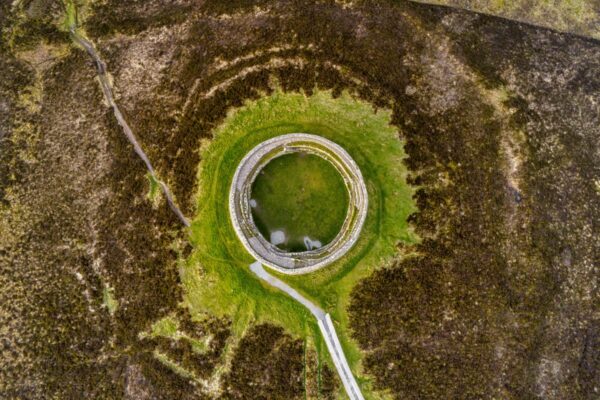
Promontory fort - coastal, Glengad, Co. Donegal
Co. Donegal |
Forts
On the rugged coastline of County Donegal, a fascinating archaeological site reveals how ancient inhabitants made clever use of natural defences.
The promontory fort at Glengad sits on a rocky outcrop that juts into the sea, connected to the mainland by only a narrow strip of land that forms a natural causeway. This strategic position would have made it an ideal defensive location, requiring attackers to approach along a single, exposed pathway whilst the occupants enjoyed commanding views of both land and sea.
The fort's most prominent feature is a stone wall that runs across the southern, landward side; essentially creating a barrier at the only point where the promontory connects to the mainland. Archaeological surveys suggest dating this wall proves challenging, as construction techniques used in such coastal defences remained relatively unchanged for centuries in this part of Ireland. Inside the fort, the ground forms an almost circular area, originally enclosed by stone walls that have since collapsed into rubble stretches around much of the perimeter.
These promontory forts represent a distinctive type of fortification found along Ireland's Atlantic coast, particularly common in counties like Donegal where dramatic cliffs and rocky headlands provided natural advantages. Whilst some were occupied during the Iron Age, others saw use well into the medieval period, serving variously as defensive refuges, status symbols for local chiefs, or centres for controlling maritime trade routes. The Glengad example, though now largely ruined, still offers visitors a tangible connection to the resourceful communities who once transformed this windswept headland into a formidable stronghold.
Visitor Notes
Added by