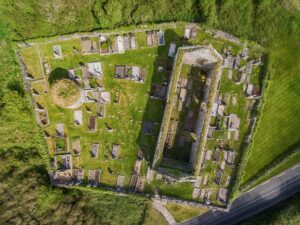
Known in Irish as a ráth, this type of monument is one of the most common archaeological features in Ireland, with estimates running to around 45,000 surviving examples across the country. They were typically the enclosed farmsteads of early medieval families, their circular earthen banks defining a domestic space that held a house, livestock, and the routines of daily life somewhere between the fifth and twelfth centuries. That ubiquity does not make any individual example less worth attention; if anything, the sheer number of them is its own kind of remarkable fact about early Irish settlement.
Rinneen lies in County Clare, a county whose western edge meets the Atlantic and whose interior holds a dense record of human occupation stretching back millennia. The local landscape, shaped by glacial action and the particular limestone geology of the region, offered early farming communities well-drained ground suitable for the kind of enclosed settlement a ringfort represents. The ráth form, built from the spoil of a surrounding ditch thrown inward to create a raised bank, was a practical response to the needs of a farming household, offering some security for animals and a clear boundary around a family's working space. In Clare, as elsewhere, these monuments have often survived because later generations left them alone, whether out of practical indifference or the persistent folk belief that ringforts were the dwelling places of the otherworld and best left undisturbed.