The slab, measuring 0.74 metres by 0.2 metres, is all that survives of a chest tomb, a box-shaped raised monument that would once have marked a grave above ground. What makes it quietly strange is that this remnant was not preserved in any formal sense; it was simply built into a cross-wall in 1804, used as convenient building material, and there it has remained.
The stone is fossiliferous limestone, a type common in medieval Irish ecclesiastical carving, its surface peppered with the compressed remains of ancient marine creatures. Carved into it in raised-relief Latin blackletter, the angular script associated with medieval manuscripts and stonework, is an inscription that survives only in fragments. The legible portions read, in translation, as an appeal from a one-time burgess of the town of Kilkenny, asking those who pass by to say a prayer, and noting that he was buried in this place. The word "quondam," meaning "sometime" or "formerly," appears in the original Latin, a word that turns up often in medieval epitaphs, carrying a particular weight; it acknowledges that a person held a position in life, a burgess being a full citizen of a medieval town with specific legal and commercial rights, and that this status is now past. The name of the individual is lost, as is the date, worn away or simply not preserved in the surviving fragment.
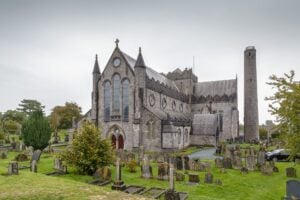
The 1804 wall into which the stone was set connects the south-western side of St Mary's with the surrounding graveyard wall, so the inscription now faces an audience it was never intended for, tucked low and structural rather than commemorative. It is a small thing to notice, easily missed, but it carries the full formula of a medieval memorial: identity, appeal, and the unambiguous fact of burial.