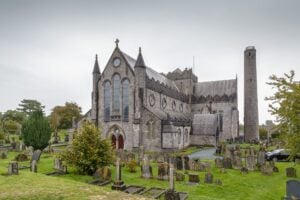
The slab is an effigial tomb, a type of carved memorial designed to bear the likeness of the deceased on its upper surface, though in this case erosion and deliberate damage have left it impossible to say whether any image ever remained visible. What survives is a tapered limestone slab, 1.62 metres long and 0.58 metres wide, broken into four large pieces and a fifth fragment shattered into six more, with a rounded edge and groove running along both long sides. The head and foot portions are gone entirely.
The circumstances that put this slab into the river are reasonably well understood, if grimly so. During the Reformation in the 1540s, iconoclasts, those who destroyed religious images on theological grounds, are thought to have defaced and dumped these monuments deliberately. The two most likely sources are close at hand: St Mary's parish church lies roughly 100 metres to the west, and St John's Priory about 200 metres to the northeast. A separate view holds that the slabs were not simply discarded but put to use, incorporated as rubble into a protective apron around the piers of the late medieval bridge that once stood just north of the current John's Bridge. Both explanations may be partially true. The slab itself, on stylistic grounds, dates to the 13th or 14th century, meaning it had likely stood somewhere in the city for two hundred years or more before it ended up in the water. It was recovered during archaeological excavations in 2001, carried out as part of the River Nore Drainage Scheme, and is now held in storage at the National Museum of Ireland.